

With Anthony Joshua vs. Tyson Fury, boxing’s dumbest problem could strike again
Boxing should be an easy sport to get right.
If you have two fighters competing at the right time, in the right place, with meaningful stakes like a legitimate world championship or two on the line, then broadcasters — and more importantly, fans — respond to that, both at the gate and at the box office online.
Sure, politics has, in the past, gotten in the way. But there’s also a modern curse that ensures a promoter’s best-laid plans often go to waste.
Premier Boxing Champions and TGB Promotions were the latest fight firms to show why organizers should not over-marinate big fights.
The promotional duo hosted a marquee double-header in May, featuring Caleb Plant and Jermall Charlo — big-name rivals — in separate bouts on the same card in Las Vegas. The idea was that both men would excel on the card, in their respective super middleweight fights, and thus tee-up an even bigger show with themselves in the main event for later in 2025.
And herein lies one of the biggest problems in boxing, even though it is also one of the very things that make it so watchable. Combat sports is typically the theater of the unexpected. And we can barely go through a big fight night without some kind of chaos reigning supreme.
So, really, it should have been no surprise to see Charlo play his part by finishing Thomas LaManna, only for Plant to immediately lose by split decision to Jose Resendiz.
And, just like that, the Plant-Charlo tentpole lost its luster.
Footage in 2023 of Plant slapping Charlo on the chops ahead of a feral brawl that spilled from the T-Mobile Arena hallways to the external Plaza in Las Vegas is no longer used as promotional footage to build an all-American rivalry with clear needle. Instead, it remains another relic of what could have been.
This isn’t just to crap on PBC and TGB, because it is a wider issue in the sport.
The gold standard of cautionary tales was Floyd Mayweather and Manny Pacquiao coming together for a 2015 fight, rather than competing — at least once and if not twice — in their prime windows of 2009-2011. Drug-testing disputes, network rivalries and a fear of losing leverage ensured the fight came too late, when both were past their athletic primes. By the time Mayweather vs. Pacquiao finally arrived, they delivered a show that generally underwhelmed for the millions who tuned in.
It's time boxing organizers learned that risk increases far faster than the value they can extract from a marquee fight. Momentum often only decays. A single upset loss can destroy years of planning, and fans get increasingly fed up at being taken for granted. In no other major sport would the biggest rivalry be delayed for a decade on the assumption that nothing could possibly go wrong.
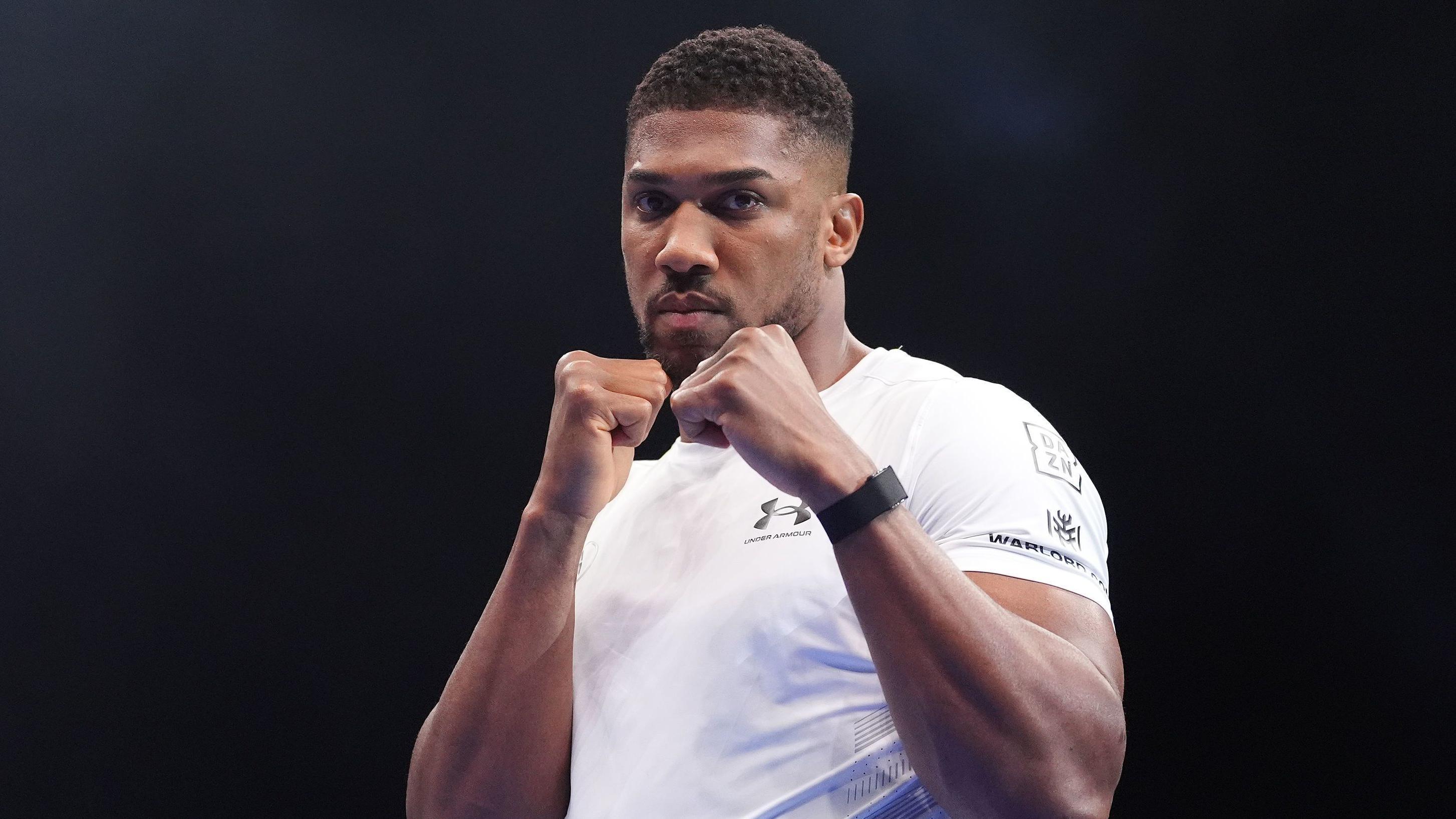
It’s why, when Ring Magazine announced this past week that Riyadh Season intends to host the long-awaited fight between Anthony Joshua and Tyson Fury, it didn’t break the internet with the knockout blow that pairing would've delivered had it been booked years and years ago.
And it’s not because it’s not a big fight. It is, kind of. But there are no meaningful stakes — and more importantly, it’s not even happening next.
Joshua must first dispatch Jake Paul in Miami on Dec. 19. And that should be easy enough to do, so one would assume we could just see "AJ" box Fury in February.
But, no. This is boxing, silly goose.
The fight you want to see isn’t happening next. And it’s not even happening next-next.
Joshua and Fury will each return to the ring, likely in February and April respectively, for a set of tune-ups against different opponents, before they tangle against one another, presumably at Wembley Stadium in London, toward the end of 2026.
But, come on. We’ve been here before, and it never works out well for the fans.
Joshua vs. Fury could have been the British heavyweight version of Terence Crawford vs. Errol Spence Jr. But now it has no titles on the line and it’s essentially a fight not to determine a unified champion, but who can be regarded second-best in this era after Oleksandr Usyk.
There are also no guarantees that Joshua, nor Fury, even win their respective tune-ups.
Daniel Dubois drilled Joshua in his last fight, and Usyk bested Fury in back-to-back bouts in 2024.
You have to look outside the top-10 rankings to find opponents who carry minimal risk of upsetting next year’s supposed mega-fight, and once you do that, you tell the sport’s fans that these tune-ups are designed less to test ambition than to protect the plan.
Worse still, if either "AJ" or "The Gypsy King" fail to mesmerize against opponents they would've annihilated in their primes, it provides further proof that the Joshua vs. Fury fight is arguably happening when it’s at its most meaningless.
Neither has a title, will never win a belt again, and one of, if not both of them, will retire immediately after.
The tragedy is that Joshua vs. Fury was once a forward-looking fight that could have defined an era. Instead, in 2026, it’ll be a cash-out if it even happens, disguised as unfinished business, and further proof that boxing — a sport that should be easy to get right — is, in fact, even easier to get wrong.